

Peak trading rarely creates entirely new operational problems. More often, it exposes the ones that have been quietly sitting in the background.
A manual stock process that feels manageable on an ordinary Tuesday becomes far more difficult when orders multiply. A slight delay between ecommerce and store inventory suddenly matters when several customers are trying to purchase the same item. A fulfilment workaround that relies on one experienced team member can quickly become a bottleneck when stores are at their busiest.
For speciality retailers, Black Friday and the wider peak season provide one of the clearest tests of how connected the retail operation really is.
Peak is becoming a longer trading period
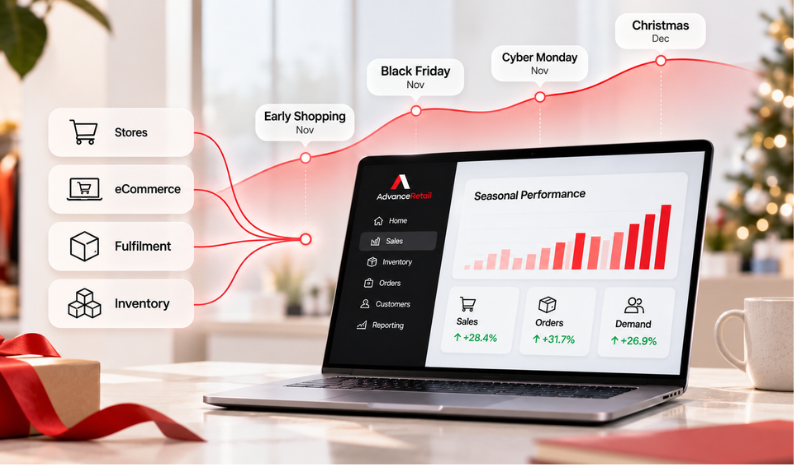
Black Friday is no longer a single promotional day on the retail calendar. ANZ shoppers are starting Christmas purchases earlier, spreading their spending across November and early December and planning more deliberately around major promotional events.
Deloitte expects more than half of holiday revenue to be generated around major promotion periods this season, which changes the operational challenge for retailers. Instead of preparing for one large December rush, stores, ecommerce, fulfilment and inventory systems may need to sustain elevated demand across a much longer window.
That makes connectivity increasingly important. When sales volumes rise, the gaps between systems, processes and teams become much easier to see.
Inventory visibility becomes more important when demand rises
A product can technically exist within the business without being available for the next sale.
It may already be committed to another order, moving between locations, sitting in a warehouse rather than the store the customer wants to collect from, or available only in a different size, colour or style.
For speciality retailers, those distinctions matter. When demand increases, inaccurate availability creates more than an inventory issue. It can lead to cancelled orders, unnecessary store calls, frustrated customers and additional work for teams trying to reconcile different versions of the truth.
AdvanceRetail helps bring stores, inventory, orders and channels together so teams have a clearer picture of what is genuinely available across the operation. That visibility becomes especially valuable during peak periods, when there is less room for uncertainty and less time to work around disconnected systems.
Store workflows are put under pressure too
Inventory is only one part of the picture.
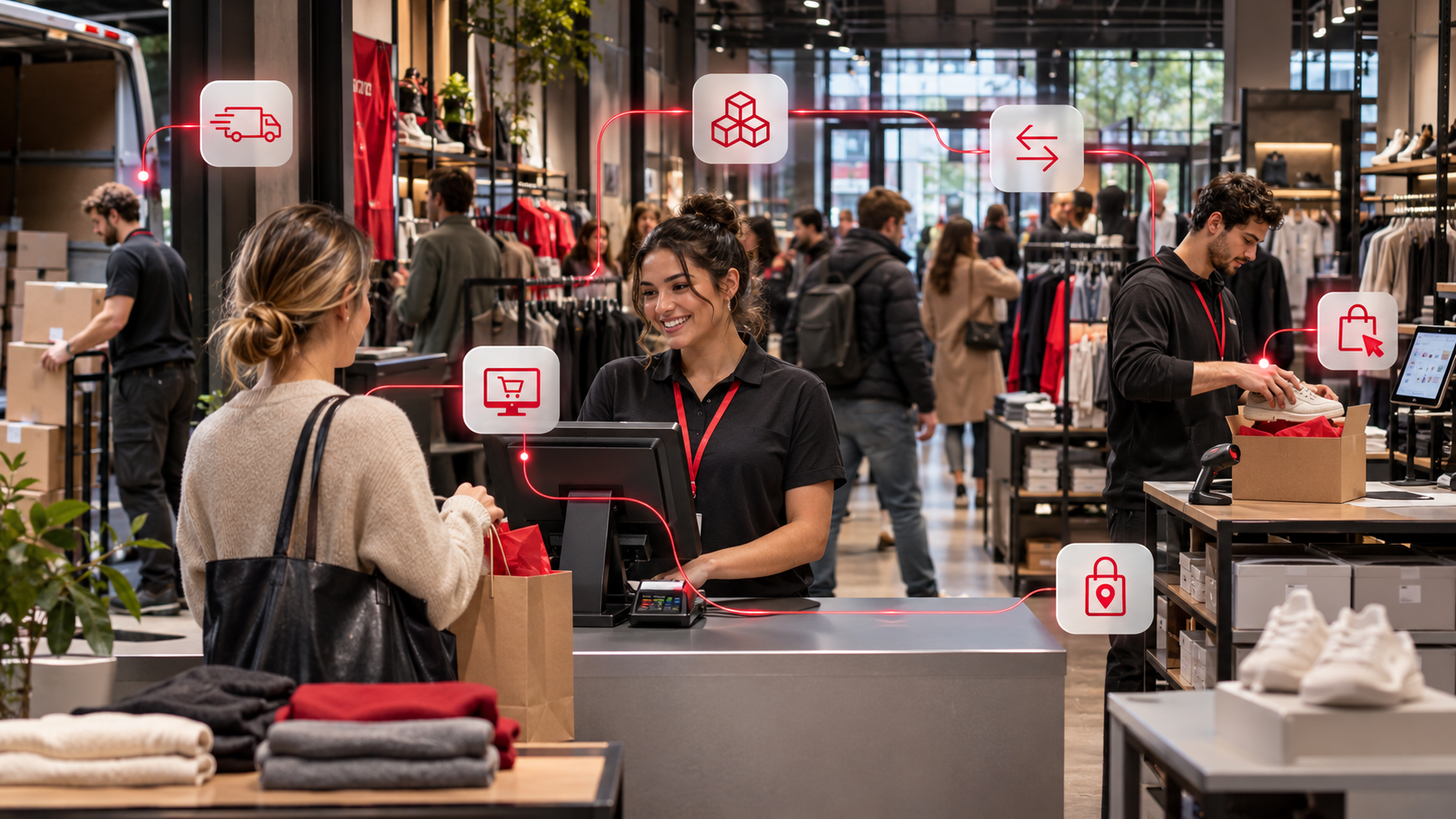
During the busiest trading periods, store teams may be processing transactions, receiving stock, picking ecommerce orders, managing Click & Collect, handling transfers and serving customers at the same time.
The technology supporting them needs to make those workflows simpler, not add another layer of complexity.
AdvanceRetail V3 connects POS, inventory, order management and store workflows within one web-native platform, helping retailers keep those processes aligned as activity increases.
That matters because the customer experience often depends on what happens behind the scenes. A simple Click & Collect experience, for example, relies on accurate stock, the right order routing, clear store tasks and reliable communication across the process.
When those parts work together, the experience feels straightforward to the customer even when there is a lot happening behind it.
AI is only as useful as the information behind it
Imagine an AI assistant recommends the perfect product to a customer. The style is right, the price is right and the size is right, but the inventory information is wrong.
The customer arrives at the store and the product is not there.
That is not a better customer experience. It is simply a faster route to disappointment.
Preparing for agentic commerce means making sure product information, pricing, inventory, orders and fulfilment can work together reliably. Those foundations already matter to stores, ecommerce teams, fulfilment operations and customers today. AI simply creates another experience that depends on the same information being accurate.
Visibility becomes more valuable as trading accelerates
Peak season also compresses decision-making.
Retailers cannot always wait until tomorrow to understand what happened today. Teams may need to know which stores are behind target, which products are moving faster than expected, where stock is accumulating or which orders need attention while there is still time to act.
This is where connected retail intelligence becomes particularly useful.
AdvanceRetail V3’s dashboards bring retail performance into one place, while AR Chat gives teams a conversational way to ask questions of their retail data. Instead of moving through multiple reports, users can ask what is happening across stores, sales or inventory and get to the information they need more quickly.
The aim is not simply to give retailers more data. It is to make that data easier to understand and act on while the business is moving.
What will peak reveal about your operation?
Black Friday, Christmas and Boxing Day will eventually pass, but the lessons they reveal about your technology are worth keeping.
Did your teams fall back on spreadsheets or manual workarounds? Was inventory difficult to trust? Did store processes create unnecessary friction? Were simple questions taking too long to answer? Did separate channels create more work than they should have?
Those pain points can be useful indicators of where the retail operation needs to become more connected.
Peak season is not only an opportunity to sell more. It is one of the best opportunities to see how well your technology, workflows and retail data actually work together when the pressure is on.
AdvanceRetail is built around the realities of speciality retail, connecting POS, inventory, orders, stores and intelligence in one platform so retailers can keep moving when trading gets busy.
If peak season is highlighting gaps in your retail operation, speak with the AdvanceRetail team to see how a more connected platform could support the way your business works.