

Why Traditional ERP Systems Fail at In-Store Execution and AI-Driven Retail Agility
Across Australia and New Zealand, many mid-to-large retailers rely on established ERP platforms that perform exactly as intended at an enterprise level. These systems consolidate financials, manage statutory compliance, support supplier settlement, and provide confidence in board-level reporting. For finance and governance teams, the ERP remains a dependable system of record.
However, once operational decisions move from the head office into stores, the experience changes markedly. Store teams depend on POS systems to transact, spreadsheets to manage exceptions, and informal communication to keep trading moving. Inventory accuracy varies by location. Promotions are executed differently across regions. Returns introduce friction that systems struggle to handle cleanly.
At the same time, retail leadership teams are under pressure to improve responsiveness through analytics or AI. Forecasting tools promise agility, yet confidence in the underlying retail data is low. Reports require explanation. Store feedback contradicts dashboards. Decision-making slows rather than accelerates.
The issue is structural, not technical. ERP systems manage enterprise data. Retail systems execute decisions. When execution is fragmented at the store level, decision velocity collapses, and analytics reflect theory rather than retail reality. This distinction lies at the heart of why many retailers are reassessing how their store operations are supported by modern retail execution platforms, such as those within the broader AdvanceRetail retail platform ecosystem.

What ERP Systems Were Originally Designed to Do
Traditional retail ERP systems were built to bring control and consistency to complex organisations. Their architecture reflects a world of structured processes, predictable flows, and reconciliation, rather than real-time store orchestration.
At their core, retail ERP systems are designed for:
Financial consolidation across brands, entities, and regions
Accounting, tax, and statutory compliance
Supplier procurement and cost control
Centralised planning and historical reporting
For retailers managing 25 or more stores, these capabilities are essential. ERP platforms provide governance, auditability, and financial discipline that cannot be compromised.
The challenge lies in architectural intent. ERP software assumes that operational data will arrive in an orderly, controlled manner. Retail stores operate in the opposite environment. Customers change behaviour instantly. Stock moves unexpectedly. Staff resolve issues in real time.
These realities explain why ERP limitations in retail are architectural rather than implementation failures. Increasingly, retailers are complementing ERP systems with execution layers designed specifically for store operations, a model reflected in modern retail system approaches such as those described in unified retail execution solutions for multi-store retailers.
Where Traditional ERP Systems Break Down in Retail Execution
The limitations of retail ERP software rarely appear during planning sessions. They surface in everyday operational scenarios.
Store transfers and inventory movement
ERP systems can record inventory transfers, but they rarely orchestrate them in real time. When one store urgently needs stock, teams coordinate manually, move product to meet demand, and update systems later. The ERP reflects what should have happened, not what actually occurred. Over time, inventory data becomes unreliable.
Without a real-time execution layer governing stock movement, inventory logic breaks down at the store level, which is why many retailers reassess how real-time inventory management designed for retail execution supports operational decision-making rather than post-event reconciliation.
Promotions applied inconsistently
Promotions are usually planned centrally but executed locally. POS systems apply pricing logic, store managers intervene to resolve customer issues, and ERP pricing remains technically correct yet operationally disconnected. Without execution governance at the transaction layer, consistency erodes.

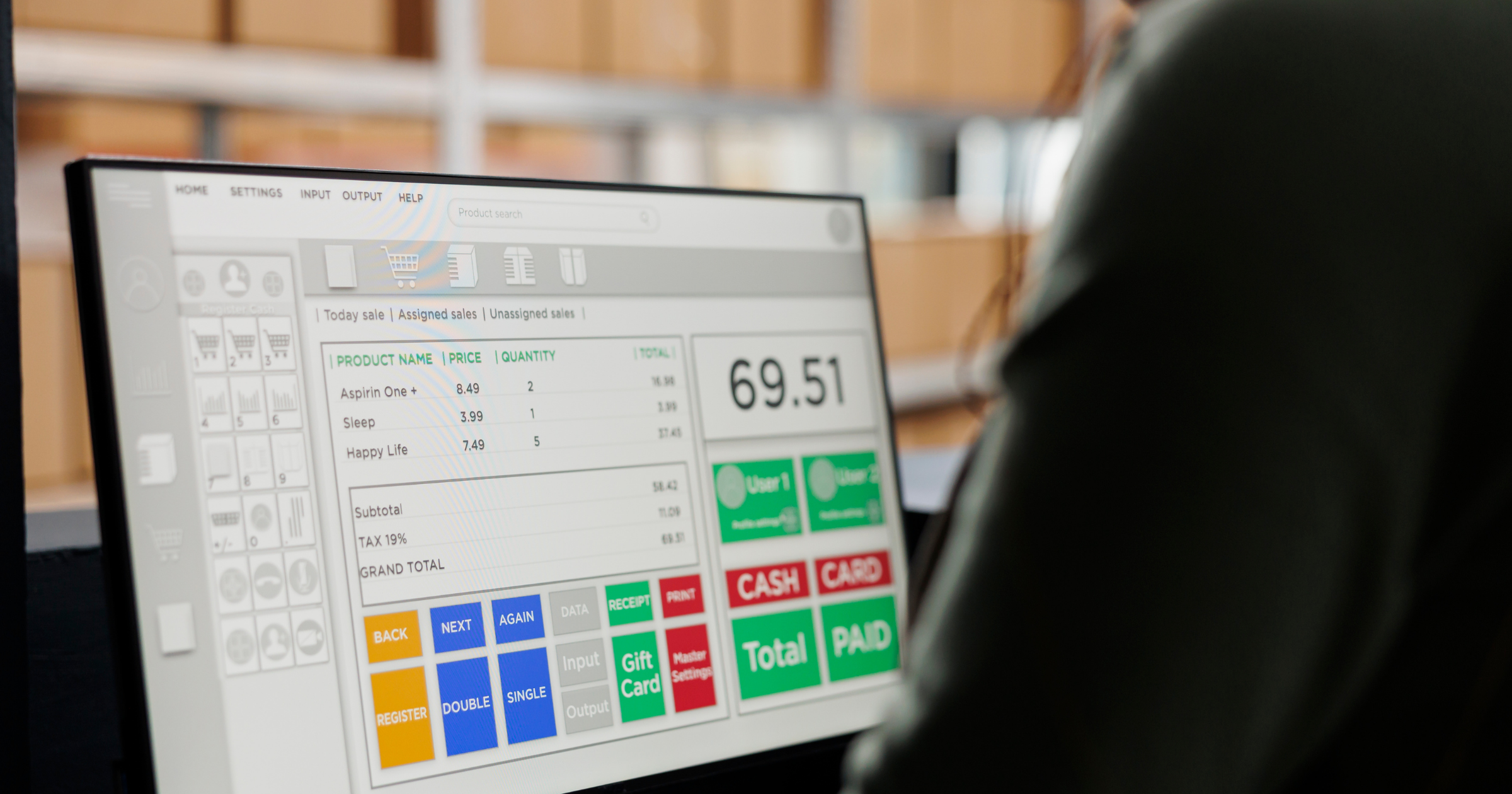
This challenge often leads retailers to reconsider whether their transactional environments genuinely support execution discipline, particularly when evaluating modern point-of-sale platforms designed for multi-store control.
Returns and exchanges breaking inventory logic
Returns highlight the gap between system logic and customer expectations. Cross-store returns, exchanges without receipts, and omni-channel fulfilment scenarios stretch ERP logic beyond its design. Staff resolve issues manually, leading to deterioration in inventory accuracy.
Store managers operating outside system controls.
When systems slow execution, store teams adapt. Tasks are delayed. Data is entered retrospectively. Decisions are made outside approved workflows. Over time, the head office loses confidence in store data, while store teams lose confidence that central systems reflect trading reality.
The Hidden Operational Cost of Poor In-Store Execution
The cost of fragmented execution rarely appears as a single failure. Instead, it accumulates quietly across the business.
Retailers respond more slowly to changes in demand because inventory data cannot be trusted in real time. Replenishment decisions become conservative, increasing overstocks in some locations and lost sales in others. Stock write-offs increase, not because demand was unpredictable, but because execution signals arrived too late.
Compliance risk also grows. Pricing, promotions, and policy adherence vary by location, creating governance exposure across store networks. For franchise and regulated retail models, this inconsistency becomes a leadership concern rather than an operational inconvenience.
Most damaging is the erosion of trust in data. Leadership teams spend time debating numbers rather than acting on them. Reports require explanation. Decision-making slows. Many retailers begin questioning their ERP setup when in-store execution becomes a bottleneck rather than an enabler.
Why AI and Advanced Analytics Fail Without Retail Execution Discipline
AI and advanced analytics are often presented as solutions to the complexity of retail. Demand forecasting, predictive replenishment, and automated decision-making promise faster and smarter operations.

However, AI does not repair broken execution. It amplifies it.
Advanced analytics depend on consistent, timely, and trustworthy operational data. In fragmented environments, data reflects a mixture of system logic, manual intervention, and delayed reconciliation. ERP data often represents a reconciled past, not the operational present.
When AI is layered onto this foundation, insights conflict with the store experience. Forecasts ignore execution constraints. Confidence erodes quickly. AI should be understood as a multiplier of operational maturity, not a shortcut around fragmented workflows.
What Modern Retail Execution Platforms Do Differently
Modern retail execution platforms are designed around store reality rather than enterprise theory. Their purpose is to standardise how decisions are executed across stores while preserving controlled flexibility at the front line.
These platforms typically provide:
Standardised store workflows
Real-time inventory and sales logic
Clear audit trails linking execution to governance
Central oversight paired with local execution
For example, centrally planned promotions can be executed consistently across regions while still allowing stores to manage controlled exceptions. Seasonal demand shifts can be acted on immediately because sales and inventory data remain aligned during execution.
This execution-first approach is also reflected in how store communication and task governance are managed through dedicated store portal environments designed for retail networks.
How Unified Retail Platforms Enable Agility Without Replacing ERP
A common fear among retail leaders is that improving agility requires replacing their ERP. In reality, this is rarely necessary.
Modern retail execution platforms are designed to integrate with ERP systems, allowing the ERP to remain the financial system of record while execution layers sit closer to stores. This layered architecture preserves prior investment while addressing operational gaps.
In practice, unified platforms bring together POS, inventory management, store workflows, and omni-channel execution. Omni-channel coordination, such as that enabled through retail omni-channel execution frameworks, ensures customer journeys remain consistent without introducing further fragmentation.
For teams assessing how retail execution platforms complement ERP systems, AdvanceRetail’s practitioner-led approach provides a useful reference point grounded in real retail operations rather than theoretical system design.
What Retail Leaders Should Reassess First
Before investing further in analytics or AI initiatives, retail leaders should reassess execution fundamentals. This should be an operational exercise grounded in store reality.
Start by identifying where execution slows. Transfers, returns, promotions, and stock adjustments are common pressure points. Map how these are handled today and where manual intervention replaces system support.
Next, assess where data trust breaks down. Which reports require explanation? Where do store teams challenge head office numbers? These tensions usually indicate execution gaps rather than reporting failures.
Finally, prioritise workflow discipline. Consistent execution across stores creates the stable data foundation that analytics require. Retailers exploring how peers have navigated this shift often review examples of multi-store networks that have successfully addressed execution complexity.
Conclusion
Traditional retail ERP systems remain essential for financial control, reporting, and compliance. Their limitations in store execution are not failures, but reflections of their original design.
Retail agility depends on disciplined, real-time execution across stores. Without it, analytics and AI initiatives struggle to deliver value, regardless of investment.
Unified retail platforms provide the missing execution layer between ERP systems and store operations. They bridge enterprise governance and store reality, enabling consistent workflows, trustworthy data, and faster decision-making across complex retail networks.
Frequently Asked Questions
Why do ERP systems struggle with in-store execution?
ERP systems are designed for structured, enterprise-level processes such as finance and compliance. Store environments are dynamic and exception-driven, requiring real-time execution workflows that ERP architectures were not built to support.
Can AI improve retail operations without fixing workflows?
AI relies on consistent and trustworthy operational data. Without disciplined execution at the store level, analytics and AI initiatives tend to amplify inconsistencies rather than resolve them.
Do retailers need to replace their ERP to improve agility?
In most cases, no. Modern retail execution platforms integrate with ERP systems, allowing retailers to retain their financial backbone while improving store-level execution.
What systems should sit between ERP and stores?
Unified retail platforms that combine POS, inventory management, store workflows, and omni-channel execution provide the operational layer between ERP systems and store teams.